

Your tongue is quietly shaping your airway.
Proper tongue posture stabilizes the adult airway and guides pediatric facial growth. TongueSmart Myofunctional Therapy provides specialized neuromuscular re-education for adults managing obstructive sleep apnea and TMJ pain, as well as engaging, playful therapy for children ages 4+. Available in person in Brigham City, Utah, and virtually worldwide.
Proper tongue posture stabilizes the adult airway and guides pediatric facial growth. TongueSmart Myofunctional Therapy provides specialized neuromuscular re-education for adults managing obstructive sleep apnea and TMJ pain, as well as engaging, playful therapy for children ages 4+. Available in person in Brigham City, Utah, and virtually worldwide.
Myofunctional therapy focuses on the muscles of the tongue, face, and airway. Simple exercises are used to teach these muscles to function and rest in their optimal positions. By improving muscle coordination and tone, we can identify and address root causes to common problems like mouth breathing, snoring, jaw pain (TMJD), narrow arches and crowded teeth.
For children, therapy supports proper growth by guiding the muscles that influence jaw development and airway formation. This helps create wider arches, healthier breathing patterns, and a strong foundation for sleep and overall growth and development.
For adults, therapy works to stabilize the airway and retrain the muscles to work together efficiently, helping to reduce tension, improve sleep quality, and support long-term stability in the jaw and airway.
Rather than focusing only on symptoms, myofunctional therapy addresses the muscle patterns that influence oral function and breathing, helping create lasting, functional change over time.
Myofunctional therapy is part of a multidisciplinary team of care. In order to achieve the best results possible, we partner with amazing providers in the area. I have recommendations for body workers, dentists, orthodontists and tongue tie release providers who are airway focused and highly trained so that we can make sure that you get the best care possible.
What is Myofunctional Therapy and who is it for?
What is Myofunctional Therapy and who is it for?
Myofunctional therapy focuses on the muscles of the tongue, face, and airway. Simple exercises are used to teach these muscles to function and rest in their optimal positions. By improving muscle coordination and tone, we can identify and address root causes to common problems like mouth breathing, snoring, jaw pain (TMJD), narrow arches and crowded teeth.
For children, therapy supports proper growth by guiding the muscles that influence jaw development and airway formation. This helps create wider arches, healthier breathing patterns, and a strong foundation for sleep and overall growth and development.
For adults, therapy works to stabilize the airway and retrain the muscles to work together efficiently, helping to reduce tension, improve sleep quality, and support long-term stability in the jaw and airway.
Rather than focusing only on symptoms, myofunctional therapy addresses the muscle patterns that influence oral function and breathing, helping create lasting, functional change over time.
Myofunctional therapy is part of a multidisciplinary team of care. In order to achieve the best results possible, we partner with amazing providers in the area. I have recommendations for body workers, dentists, orthodontists and tongue tie release providers who are airway focused and highly trained so that we can make sure that you get the best care possible.
What can I expect from
Myofunctional Therapy ?
Step 1:
Schedule and meet for your Comprehensive Myofunctional Evaluation either in person or online. Here we will go over a symptom history, pictures and measurements to understand your specific needs. We will also perform functional evaluations to test for a tongue tie, functional swallow pattern and lack of tongue space or need for palatal expansion. Any necessary referrals will be made. I am incredibly passionate about finding root cause solutions, so I partner with trusted, airway focused specialists to make sure you and your family are fully supported every step of the way.
Step 2:
Meet for your individualized therapy sessions every 2 weeks for 30-45 minutes. The number of sessions needed may vary by individual, but typical is between 12-14.
Step 3:
Do your exercises at home for 5 minutes twice a day. We design our programs to fit your lifestyle. For adults, exercises are streamlined, effective, and highly efficient to fit into a busy workday. For children, we turn therapies into engaging, active games so practice is entirely stress free. The more consistent you are, the better your results will be!
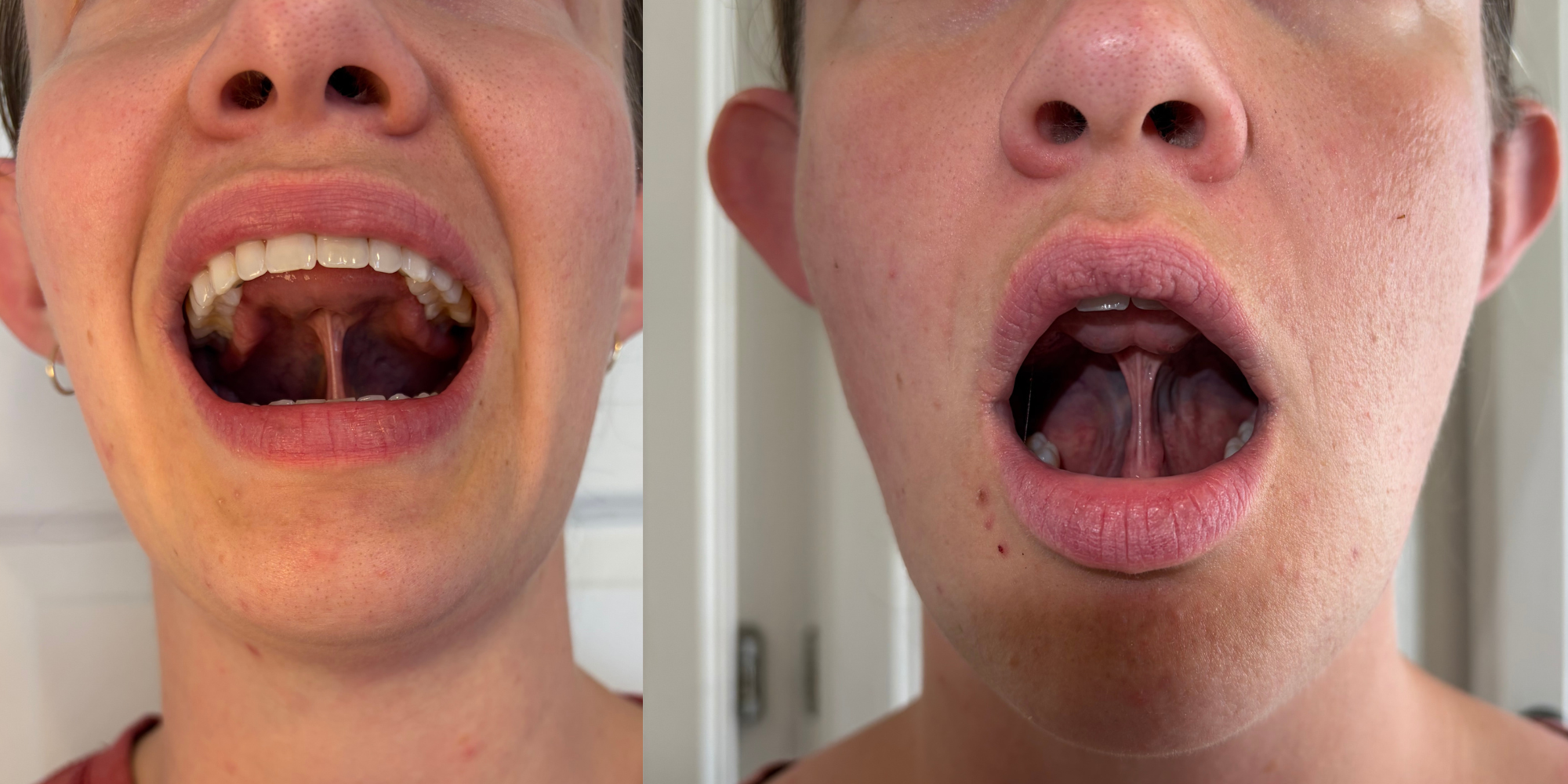
*Improved tension, muscle tone and range of motion after just 3 sessions!What Issues can Myofunctional Therapy treat
Mouth Breathing
Tongue tie
Narrow palate
Snoring
TMJ pain
What Issues can Myofunctional Therapy treat?
Orthodontic Relapse
Obstructive Sleep Apnea
Clenching/Grinding teeth
Poor Sleep